
Honduras Election: Polls Open Amid Threatened Aid and American Shadows 🇭🇳🗳️
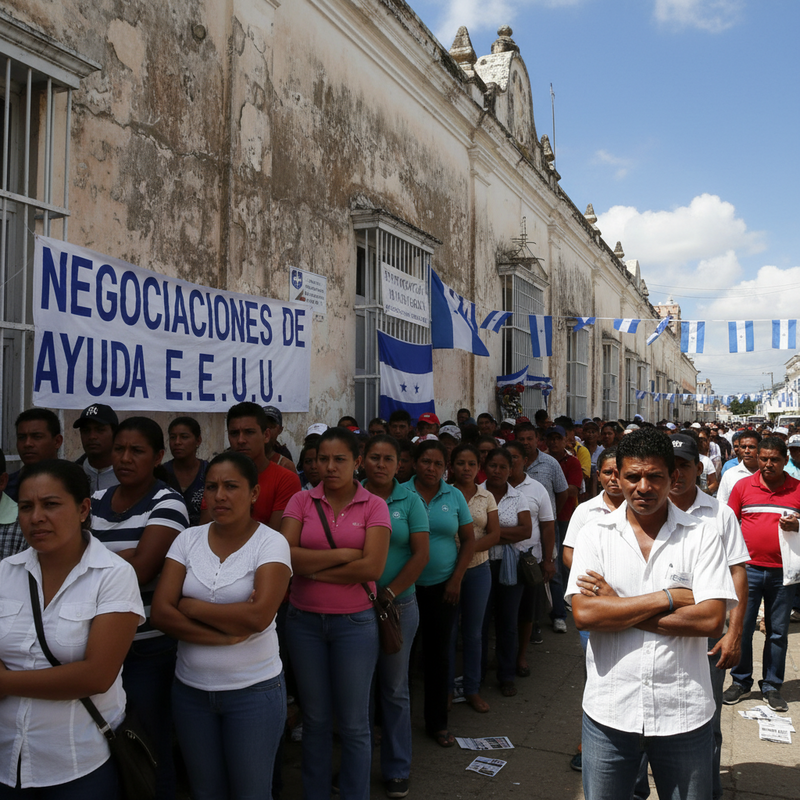
As the sun dawned on Honduras this election day, thousands of citizens queued — not just to vote, but at the crossroads of international whispers and simmering political suspense. The contest, ostensibly about who will steer the country’s fragile democracy, unfolds under a thick cloud of diplomatic pressure and looming U.S. aid threats. It is democracy strained, like a fragile glass stretched across tectonic plates of power and influence — will it shatter under the strain or hold firm?
The Weight of Conditionality: Foreign Aid as an Electoral Baton
It’s a curious paradox that a nation’s sovereignty can feel most fragile in the act of its own self-determination. The U.S., under the lingering shadow of the Trump administration’s rhetoric, has repeatedly dangled aid—worth hundreds of millions in economic and security funding—as both carrot and stick. This aid is conditional; democratic “progress” or, conversely, regress, will purportedly decide if the financial faucet stays open or is mercilessly shut off.
The irony hits like a dry wind: here is a country called to vote freely while the script suggests the invisible hand of external power is ready to snatch the puppeteer’s strings at the first sign of “wrong” results. Threats that sound like echoes from a political thriller become the sinister soundtrack to a developing democracy. Is it support, or is it control disguised as assistance?
Democracy in a Pressure Cooker: Contrasting Ideals and Realities
Cast your eyes further back, and the situation takes on a biting, almost tragic irony — Honduras’s electoral experiment stands as a striking antithesis to the idealized image of democracy championed worldwide. What should be an organic political choice here resembles a chessboard, where pawns are voters, queens are international interests, and kings… well, kings seem perhaps out of place in a modern republic.
The country has been no stranger to tumultuous politics — marked by coups, contested elections, and corruption allegations. That this election is held at all might feel like progress to some — but it’s progress along a razor’s edge, balancing on a blade fashioned from promises, threats, and geopolitical chess.
Anecdotally, a voter in Tegucigalpa shared, “We come here bearing hopes like fragile lanterns, but the storms around us sometimes make us wonder if the lights will last.” Such feelings are a tempered blend of hope and caution, emblematic of the broader national mood.
Trump’s Legacy: Aid and Agenda Intertwined
Former President Trump’s vocal skepticism about foreign governments combined with a stark transactional approach to diplomacy has imparted lingering effects on the region’s political climate. His rhetoric branded countries, including Honduras, as rife with corruption and instability, justifying punitive aid measures aimed at “forcing change.”
“Cutting aid to build democracy is like planting a garden with drought,” commented a Central American political analyst. “Without nourishment, what can grow?”
Yet, this blunt policy tool slices both ways. Without foreign aid, often earmarked for critical development programs and security cooperation, the Honduran government might struggle to maintain basic services, exacerbating instability. The U.S.’s simultaneous position as guarantor and critic crafts a paradox: is it assistance or leverage?
The Voting Booth: A Symbol and a Stage
On the ground, for Hondurans, this election day is woven with a tapestry of complex emotions — apprehension, resilience, defiance. The polls are their stage to respond — to the international pressures, their own political history, and hopes for a stable future. Ballots become more than votes; they transform into acts of civil bravery amid a maelstrom of external influence and internal division.
Security concerns and voting irregularities are already whispers on the breeze. Nonetheless, grassroots organizations have mobilized, deploying observers and advocating for transparency. Amid the charged atmosphere, ordinary citizens seem determined to reclaim agency, even as global power dynamics loom like an uninvited audience.
How Should the World Watch?
As the votes are counted, a key question arises: can democracy thrive under the pressure of conditional aid, or will it merely become a puppet theater where strings pulled abroad drown out voices at home? The outcome will echo far beyond Honduran borders, resonating in broader debates about sovereignty, foreign intervention, and the real meaning of democratic support.
Much like a delicate ecosystem reacting to climate change, Honduras’s political environment is a barometer for how fragile democracies survive where international aid meets local ambition. Will the winds remain hostile, or will a new breeze usher in genuine autonomy and hope? Watch these polls closely — they narrate a deeper story of power in the 21st century.
As Honduras stands in the crosshairs of aid and autonomy, its election is less a question of who wins, but what democracy itself looks like when conditioned by the weight of foreign threats and local aspirations.⚖️🌎